How Much Is an AI Robot: Comprehensive Pricing Guide 2025
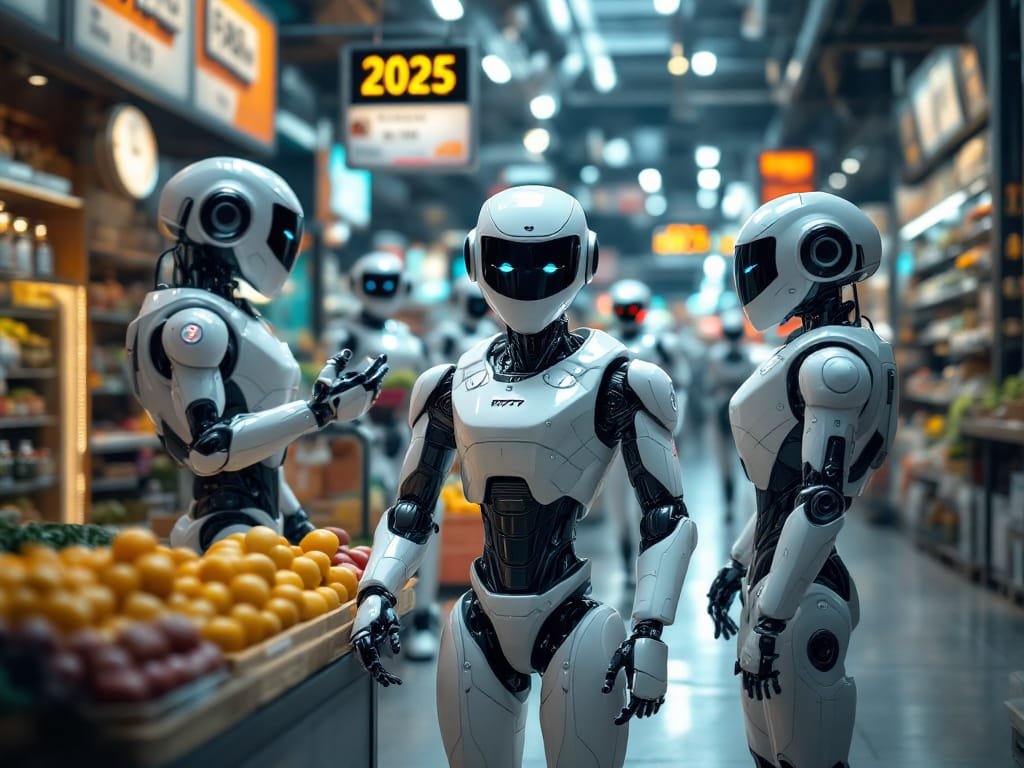
AI robots aren’t sci-fi anymore – they’re real and getting more affordable by the day. In 2025, knowing what these smart machines actually cost matters whether you’re running a business or just love tech gadgets. This guide breaks down real prices across the market. You’ll learn what factors drive costs and which robot might fit your budget (without emptying your wallet).
How Much Does an AI Robot Cost in 2025?
The robot market has split into clear price brackets based on what they can do and who buys them. Let’s check out what you get at different price points this year.
Entry-level consumer AI robots pricing range
Budget-friendly robots now start at just $500 and top out around $3,000. These include fancy robot vacuums, basic companion bots, and robots that help kids learn coding.
Smart vacuum robots with AI navigation and home integration cost between $500-$1,200. Price jumps depend on features like if they can recognize objects, map your house, or empty their own bins. Simple social robots that can chat a bit and help with basic tasks start around $1,000. The fancier ones with better personality software hit about $2,500.
Educational robots for teaching kids programming have gotten really popular. They typically cost $800-$2,000, with price based on how complex they are and what learning materials come included. These make great starting points for families or schools who want to try robotics without spending a fortune.
Mid-range AI robots and their features
The middle bracket ($3,000-$15,000) offers way more bang for your buck. These robots pack better AI, sharper sensors, stronger computers, and can handle more varied tasks.
Small business service robots fall here, with front-desk helpers, inventory trackers, and basic healthcare assistants costing between $5,000-$12,000. They handle routine customer questions, track inventory, and work with your business software.
Better personal robots that can actually hold conversations, recognize faces, detect emotions, and learn your home routines cost $7,000-$15,000. These bots multitask around the house, keep an eye on security, and make more convincing companions.
Research robots for universities start around $10,000 and reach $15,000 for ones you can heavily customize. These are built to be hacked and reprogrammed for whatever weird experiment you’re running.
Premium and industrial-grade AI robots pricing
The high-end market starts around $15,000 and shoots up to several hundred grand for specialized industrial units. These robots represent the bleeding edge of what’s possible today.
Advanced humanoid robots with realistic movement, hand dexterity, and complex AI brains typically cost $75,000-$150,000. Think Boston Dynamics or the newer Tesla Optimus models – these can navigate almost any physical space.
Specialized industrial robots for manufacturing, healthcare, or dangerous environments range from $30,000-$500,000 based on what they can do. Surgical assistants, precision factory bots, and robots built for extreme conditions cost so much because they need to be super reliable.
Complete autonomous systems that link multiple robots under one AI brain can cost over $1 million for full factory or warehouse setups. These aren’t just single robots but entire automated workflows.
Factors affecting AI robot pricing
Several key things determine where a robot lands in these price ranges:
- Physical capabilities: Mobility type (wheels, legs, stationary), manipulation abilities (grippers, hands, specialized tools), and environmental adaptability dramatically impact cost
- Sensory systems: The quality and array of cameras, microphones, touch sensors, and environmental monitoring tools
- Processing power: On-board computing capabilities versus reliance on cloud processing
- Battery life and charging systems: Higher-quality power systems significantly increase costs but improve usability
- AI sophistication: The complexity of decision-making algorithms, learning capabilities, and specialized training
- Software ecosystem: Available applications, development tools, and integration capabilities
According to a Robotics Business Review market analysis, prices have dropped about 15-20% since 2023. This is mainly due to better manufacturing and more standardized parts. Expect this trend to continue, though the cutting-edge models still command top dollar.
What Features Influence the Price of AI Robots?
Understanding which features actually drive up costs can help you decide which capabilities are worth paying extra for.
AI capability levels and their cost implications
How smart a robot’s “brain” is represents one of the biggest price factors. Today’s AI robots generally come in four intelligence tiers:
| AI Level | Capabilities | Typical Cost Impact |
|---|---|---|
| Basic Programmed Response | Fixed responses to specific inputs; minimal adaptation | Minimal premium ($0-500 over non-AI alternatives) |
| Narrow Learning AI | Can improve at specific tasks through data; limited domain adaptation | Moderate premium ($500-3,000) |
| Multi-Domain Intelligence | Functions effectively across various tasks; meaningful adaptation and learning | Significant premium ($3,000-20,000) |
| Advanced Autonomous AI | Sophisticated decision-making; can handle novel situations; demonstrates intuitive understanding | Major premium ($20,000+) |
The smarter robots need fancier algorithms, beefier processing, and extensive training on massive datasets. Companies spread these development costs across the price tag, with the smartest robots costing the most.
Specialized AI skills also jack up prices. Advanced computer vision adds $1,000-5,000, good natural language processing costs $2,000-8,000, and emotion recognition adds $3,000-7,000 when they’re implemented well.
Hardware components and their impact on pricing
Physical parts make up another huge chunk of robot costs:
Actuators and mobility systems: The gap between basic wheels and walking on two legs can add tens of thousands. Fancy joints with multiple movement directions, precise control, and force feedback are super expensive. Each high-end motorized joint might add $1,000-3,000 to the price.
Sensors: HD cameras with depth perception add $500-2,000, while advanced sensor packages (heat, chemical, pressure) tack on several thousand more. LIDAR systems for mapping spaces precisely typically add $1,000-4,000 depending on range and detail.
Materials and construction: Tough, light materials like carbon fiber and special metal alloys drive up costs but make the robot last longer and perform better. Weather-resistant or industrial-grade builds can boost manufacturing costs by 30-50%.
Processing hardware: On-board computing determines how much the robot can think for itself versus needing the cloud. Specialized AI processing chips add $1,000-5,000 but make the robot respond faster and work more independently.
Battery tech remains a big cost driver. High-capacity, quick-charging systems add $500-2,000 but let the robot work long enough to be actually useful.
Software sophistication and licensing costs
While hardware gets all the attention, software increasingly drives prices in advanced robots:
Core operating systems: Special robot operating systems with security features and real-time capabilities typically add $1,000-3,000.
AI model licensing: Many robots use pre-trained AI models that cost millions to develop. Companies either bake this into the purchase price or offer subscriptions ranging from $50-500 monthly.
Application ecosystems: Robots with lots of available apps or developer tools might cost more upfront but offer better value over time. Some makers sell hardware cheap to make money through their software marketplaces instead.
Cloud services integration: Many robots need cloud processing for their smartest functions, with subscription costs running $10-100 monthly depending on usage and features.
Software updates are another cost to consider. Some companies include years of updates with purchase while others make you subscribe for ongoing improvements.
Customization options and their price considerations
The ability to customize your robot often adds significant costs:
Physical customization: Modular robots that let you swap attachments, add tools, or adapt to different environments typically cost 15-30% more but give you more flexibility.
Cognitive customization: Training a robot on your organization’s specific knowledge costs $2,000-10,000 extra, depending on how sophisticated its learning system is.
Integration capabilities: Business-grade robots designed to connect with your existing systems, security, or specialized equipment typically cost 25-40% more than standalone units.
Appearance customization: For customer-facing robots, options to change their look, voice, personality, or branding usually add $500-3,000 to the price.
Custom development work costs the most. Minor tweaks start around $10,000, while comprehensive customization of advanced systems can easily exceed $100,000. Ouch!
Which Industries Are Investing in AI Robots?
Different sectors need different robots and have varying budgets. Looking at industry-specific use cases helps put robot pricing in context.
Healthcare sector AI robot applications and costs
Healthcare is pouring money into robotics, with applications from surgery to patient support:
Surgical assistance robots: Advanced surgical bots cost between $500,000 and $2.5 million, with the da Vinci system being the most famous. They require special training but can make surgeries more precise with faster recovery.
Patient care robots: Robots for monitoring patients, helping with mobility, and basic care typically cost $25,000-$75,000. They help fill gaps when medical facilities don’t have enough staff.
Pharmacy and laboratory robots: Automated systems for handling medications and lab samples usually cost $30,000-$200,000. They’re more accurate and faster than humans at repetitive tasks.
Therapeutic robots: Special robots for physical therapy, mental health, and elder care cost $5,000-$30,000. The ones with better interactive abilities cost more.
Healthcare robots face strict regulations, which adds to their development and certification costs. According to Healthcare IT News, many medical facilities now lease robots instead of buying them, with monthly subscriptions ranging from $2,000-$10,000 based on capabilities.
Manufacturing industry robot pricing structures
Manufacturing remains the biggest robot market, with clear return-on-investment driving purchases:
Assembly line robots: Traditional industrial arms with added AI smarts for adaptable manufacturing cost $25,000-$100,000 each. Price varies based on how much weight they handle, how precise they are, and how smart they are.
Collaborative robots (cobots): These safer, more flexible robots designed to work beside humans typically cost $20,000-$50,000. The ones with better sensing and AI fall at the higher end.
Autonomous mobile robots (AMRs): Factory floor transport and logistics robots generally cost $15,000-$100,000, depending on how much they can carry, how well they navigate, and how they connect to other systems.
Quality control robots: Systems using AI vision for finding defects and checking quality typically cost $30,000-$150,000. They’re way more consistent than human inspectors.
Most manufacturing robots now learn on the job, optimizing their work over time and adapting to product changes. This AI upgrade typically adds 20-40% to traditional industrial robot prices but needs less programming and offers better flexibility.
Retail and customer service AI robot investments
Retail has become a growth area for robots, focused on customer experience and operational efficiency:
Customer service robots: Interactive robots that greet customers, provide directions, and offer basic support typically cost $10,000-$30,000. Models that speak multiple languages or offer personalization cost more.
Inventory management robots: Autonomous systems that scan shelves, monitor stock, and track inventory generally cost $20,000-$50,000. They save on labor while being more accurate.
Delivery and fulfillment robots: Systems for warehouse picking, packing, and last-mile delivery range from $15,000-$100,000 based on their capabilities and where they operate.
Security robots: Patrol and monitoring robots for retail stores typically cost $25,000-$70,000. They provide around-the-clock coverage and can spot threats human guards might miss.
Retail robots are often leased rather than purchased, with typical monthly costs of $2,000-$5,000 for mid-range units. This helps stores manage cash flow and keep their robots updated as consumer expectations change.
Research and education AI robot price points
Schools and research labs have unique needs that affect how robots are priced and acquired:
Educational robots: Platforms for teaching robotics and AI range from $1,000 for basic models to $20,000 for advanced university systems. They usually have open designs and lots of documentation.
Research platforms: Configurable robots for academic research typically cost $15,000-$100,000. Their prices reflect flexibility and expandability rather than polished user experience.
Custom research robots: Specialized robots for specific research projects can exceed $250,000, especially when they include novel features or work in extreme conditions.
Multi-robot systems: Robot swarms and multi-agent systems for studying collective behavior start at $50,000 for basic setups and can reach several hundred thousand for complete labs.
Educational institutions often get special discounts of 15-30% from manufacturers who want to support education and develop future robotics talent. Research grants remain a key funding source for fancy research robots, helping offset the steep purchase costs.
The Hidden Costs of AI Robot Ownership
The sticker price is just the beginning. Understanding ongoing expenses is crucial for budgeting and figuring out if a robot is worth the money.
Maintenance and updates expenses
Keeping robots running smoothly requires regular maintenance and software updates:
Physical maintenance: Annual upkeep typically runs 8-15% of the initial price for industrial robots and 5-10% for consumer and commercial models. This covers replacement parts, mechanical servicing, and sensor tuning.
Software updates: Some makers include updates in the purchase price, while others charge yearly fees ranging from $500-$5,000 depending on the robot’s complexity. These updates fix security holes, improve performance, and add new features.
Cloud services: Many AI robots need cloud processing for their smartest functions, with typical monthly costs of $100-$1,000 based on usage and capabilities.
Technical support: Service contracts for business robots typically cost 5-12% of the purchase price annually. Consumer models offer tiered support plans ranging from $200-$1,000 yearly.
Complex systems might need on-site tech staff, adding major personnel costs to the total expense. Some manufacturers now offer remote monitoring and predictive maintenance that can reduce downtime but add $1,000-3,000 yearly to operating costs.
Energy consumption considerations
Power needs vary widely between robots and can be a significant ongoing expense:
Mobile robots: Battery-powered units need regular charging, with electricity costs typically running $50-$500 yearly depending on size, usage, and local energy prices.
Industrial robots: Larger fixed installations can guzzle power, with annual electricity costs of $1,000-$10,000 for energy-hungry applications.
Charging infrastructure: Special charging stations or power systems may be needed, adding $500-$5,000 to initial setup costs.
Battery replacement: Most robot batteries need replacing every 2-3 years, costing from $200 for consumer models to $2,000+ for industrial units.
Energy efficiency has become a major focus for robot makers. Newer models typically use 15-30% less power than 2023 versions. This can save lots of money over the robot’s life, especially for power-hungry applications.
Insurance and liability costs
As robots get more independent and work closer with humans, insurance has become more important:
Liability insurance: Coverage for damage or injuries caused by robots typically costs 1-5% of the robot’s value each year. Rates depend on how risky the application is.
Property insurance: Protecting the robot itself from damage or theft usually adds 2-4% of its value in yearly premiums.
Specialized AI risk insurance: New policies covering algorithm errors, privacy breaches, or bad autonomous decisions typically add $1,000-5,000 annually for business deployments.
Regulatory compliance: Keeping up with changing AI regulations might require regular assessments and certifications, adding $2,000-10,000 yearly for enterprise deployments.
Robot insurance is getting cheaper as insurance companies gather more data. Some manufacturers now bundle insurance with their service contracts, making it easier to get coverage at better rates.
Training and integration expenses
Getting robots to work effectively requires serious investment in people and system connections:
Staff training: Initial operator training typically costs $1,000-5,000 per person. Advanced technical training for maintenance staff runs $5,000-15,000 per person.
System integration: Connecting robots to existing business systems typically requires 50-200 hours of professional services at $150-300 per hour, depending on complexity.
Workflow redesign: Optimizing processes to work well with robots often requires consulting services ranging from $10,000-$50,000 for thorough assessments.
Physical environment modifications: Adapting spaces for safe robot operation can cost from almost nothing for consumer robots to $50,000+ for industrial installations needing major changes.
Companies now realize that successful robot deployment is as much about change management as technical setup. Budget allocation for training and integration has grown from about 10% of robot costs in 2023 to 15-25% in 2025 as businesses try to get better returns on their robot investments.
Future Trends in AI Robot Pricing
Current market trends point to several big shifts in robot pricing models and costs in the coming years.
Projected price decreases due to manufacturing scale
As the robot market expands, economies of scale are driving major cost reductions:
Component standardization: Standard sensor packages, processing modules, and actuator systems are cutting manufacturing costs by 5-15% yearly across most robot categories.
Manufacturing automation: In a twist of irony, robots are increasingly building other robots. Automated production lines cut labor costs and improve quality. This trend will likely accelerate, potentially cutting production costs by 20-30% over the next three years.
Supply chain maturation: As the robotics supply chain gets more established, component costs are falling while availability and quality improve. Mid-range robots are seeing the biggest price drops from this trend.
Market competition: New manufacturers, especially from emerging economies, are creating pricing pressure across all segments. Chinese manufacturers have grabbed significant market share by offering increasingly capable systems at competitive prices.
Analysts predict these factors will drive yearly price drops of 8-12% for comparable capabilities over the next three years. Entry-level and mid-range robots will see the biggest reductions. High-end systems will likely see smaller decreases as they keep incorporating the newest technologies.
Emerging subscription and robot-as-a-service models
Robot financing is changing fast, with new business models reshaping how organizations get robotic technology:
Robot-as-a-Service (RaaS): Subscription-based robot access is booming, with monthly fees typically running $500-$5,000 based on capabilities. These plans include maintenance, updates, and often replacement guarantees.
Outcome-based pricing: Some manufacturers now charge based on what the robot accomplishes rather than for the robot itself. Warehouse robots might be priced per item picked or per square foot covered.
Hybrid ownership models: Combined approaches where you buy the hardware but subscribe to software and AI features are becoming common. This separates physical depreciation from digital assets.
Robotics marketplaces: Platform models connecting robot owners with temporary users are emerging. This creates “gig economy” opportunities for robot deployment without long-term commitments.
Industry research shows RaaS models growing twice as fast as traditional sales. About 35% of commercial robot deployments will use some form of subscription by 2027. This shift makes advanced robotics more accessible to smaller businesses while giving manufacturers more predictable revenue.
Impact of technological advancements on pricing
New technologies are reshaping robot costs and capabilities:
Edge AI processing: Better on-device AI processing reduces cloud dependency, potentially lowering ongoing costs while improving response times and privacy. This technology might cut operating costs by 15-30% for many applications.
Battery technology: New energy storage tech promising 50-100% better capacity and faster charging is in development. This could reduce both upfront and operational costs for mobile robots.
Soft robotics: Advances in flexible, adaptable robot structures could reduce complexity and cost for handling tasks while making human-robot collaboration safer.
Generative AI: Large language models and generative AI are dramatically improving how robots understand context and communicate naturally. This might reduce the need for expensive custom programming.
Self-repairing systems: Emerging tech allowing robots to diagnose and sometimes fix their own problems could significantly cut maintenance costs, which currently eat up 10-20% of lifetime expenses.
While these technologies will eventually make robots cheaper, they often come with premium prices at first as manufacturers recover R&D investments. The coolest applications typically appear in expensive models before gradually becoming standard features across all price points.
Conclusion
The 2025 robot market offers tons of options, prices, and business models that show how fast this tech is evolving. While costs remain high – especially for advanced features and industrial applications – ongoing trends in manufacturing scale, competition, and new business models are making robots more accessible.
When considering a robot purchase, look beyond the sticker price to understand total ownership costs. Maintenance, energy, integration, and training often add 50-200% to the purchase price over a robot’s lifetime. These hidden costs are essential for getting the most from your shiny new metal friend.
Looking toward the back half of the decade, the most successful robot deployments will be ones that match capabilities to actual needs rather than chasing the fanciest (and most expensive) options. With so many price points and buying options available, there’s probably a robot solution for almost any budget – as long as your expectations match what you’re spending.
The true cost of an AI robot in 2025 isn’t just measured in dollars but in the value it delivers. As the technology matures, that equation increasingly favor’s adoption across more industries and applications than ever before.
Share this content: